Monday, November 14, 2011

Your Prius' Deepest Darkest Secret.

Blue Marble
A magnet made of the rare earth neodymium

So you're considering buying a hybrid car. Or maybe you already have. Good for you! You're saving a bundle on gas, and reducing your environmental footprint at the same time. But fuel isn't the only natural resource that your car requires. Its motor also contains a small amount of neodymium, one of 17 elements listed at the very bottom of the periodic table. Known as the rare earths, these minerals are key to all kinds of green technology: Neodymium magnets turn wind turbines. Cerium helps reduce tailpipe emissions. Yttrium can form phosphors that make light in LED displays and compact fluorescent light bulbs. Hybrid and electric cars often contain as many as eight different rare earths.


This hockey-puck-sized hunk of the rare earth neodymium is currently worth about $350.

And the stuff is good for more than just renewable energy technology. Walk down the aisles of your local Best Buy and you'll be hard-pressed to find something that doesn't contain at least one of the rare earths, from smart phones to laptop batteries to flat-screen TVs. They're also crucial for defense technology—radar and sonar systems, tank engines, and the navigation systems in smart bombs.

Given all this, it's not surprising that the rare earths industry is booming. Demand for the elements has skyrocketed in the past few years, and a recent report predicted it to grow by 50 percent by 2017.

For the last few decades, China controlled the world's market for rare earths, producing about 97 percent of the global supply. But in late 2010, China cut its exports by 35 percent in order to keep the valuable metals for its own manufacturers. Rare earth prices rose almost immediately. Fearing a shortage, US legislators sprang into action. This past April, Rep. Mike Coffman (R-Colorado) introduced a bill that would kickstart a domestic rare earths renaissance in the United States.


A few rare earth mines are slated to open in the US in the next few years, the most hyped of which is a facility called Mountain Pass in California's Mojave Desert. (It's actually been around off and on since the '50s, but a company called Molycorp has given it a major makeover.) When it's running at full capacity, Mountain Pass will be the largest rare earth mine in the world, producing upwards of 40,000 tons of the stuff every year.

Which means Molycorp will also have to deal with a whole lot of waste. Rare earths occur naturally with the radioactive elements thorium and uranium, which, if not stored securely, can leach into groundwater or escape into the air as dust. The refining process requires huge amounts of harsh acids, which also have to be disposed of safely. Molycorp claims that its new operations are leak-proof, but the company's ambitious plans have raised a few eyebrows among environmentalists, since the site has a history of spills.

But no matter how quickly new mines open, the US won't be able to produce enough rare earths on its own—it's thought that North America contains only 15 percent of the world's supply. A recent Congressional Research Service report (PDF) recommended that the US seek reliable sources in other countries.

And that's where the real environmental problems begin. Mines in China have a particularly terrible record of contamination. Communities around a former rare earths mining operation in Inner Mongolia, for example, blame hundreds of cases of cancer on leaked radioactive waste from the mine, and local people complain that their hair has gone white and their teeth have fallen out.

Right now, our most likley non-domestic rare earths source is an Australian company called Lynas. Although the company will mine its materials in Australia, it hopes to build its refinery in Malaysia. This idea is controversial among Malaysians, to say the least. Some suspect that Lynas is choosing to refine in Malaysia in order to sidestep more stringent environmental regulations. "If they had built the Australia, it would have been a lot more expensive and difficult to permit than in Malaysia," says Jon Hykawy, an analyst with the Toronto-based brokerage Byron Markets, which specializes in rare earths.

It's understandable that Malaysians would be wary of Lynas' plans, given the nation's history with rare earths. In the jungled interior of the country, a mine owned by Mitsubishi had a major spill in 1992. In the years since, nearby villagers have seen high rates of birth defects and eight cases of leukemia. And Mitsubishi is still dealing with the mess: The New York Times recently called it "the largest radiation cleanup yet in the rare earth industry."

This creates a real dilemma: What good is green technology if it's based on minerals whose extraction is so, well, ungreen? Most of the experts that I talked to agreed that the elements are just too useful to give up on. "We need this stuff," says Jim Kuipers, an independent mining consultant in Montana. "It's just a matter of figuring out how to do it right, and unfortunately, the mining industry doesn't have a strong history of doing this."

It'll help if citizens pressure companies to build clean mines and refineries. To that end, Malaysians have formed a group called Stop Lynas to protest the construction of the refinery and the sweet 12-year tax break that the Malaysian government plans to give it. Analyst Hykawy has recommended that his clients sell their stock in Lynas, in part because the controversy over the refinery means that the plant probably won't be up and running for months, maybe years.

And US companies like Molycorp can help by keeping their promise to pioneer cleaner techniques, which, if they become cheap enough, could be adopted by international mines in the years to come. "There is no reason that if these folks are willing to make this change they couldn't do it," says Kuipers. "I just hope they're really willing."

So is Molycorp as green as it claims? I visited the site to see for myself. More soon.
Kiera Butler is the articles editor at Mother Jones. For more of her stories, click here. Get Kiera Butler's RSS feed.

Friday, October 28, 2011

Worst Food Additive Ever? Production Destroys Rainforests / Enslaves Children.


The production of this ingredient causes jaw-dropping amounts of deforestation (and with it, carbon emissions) and human rights abuses. 
On August 10, police and security for the massive palm oil corporation Wilmar International (of which Archer Daniels Midland owns a majority share) stormed a small, indigenous village on the Indonesian island of Sumatra. They came with bulldozers and guns, destroying up to 70 homes, evicting 82 families, and arresting 18 people. Then they blockaded the village, keeping the villagers in -- and journalists out. (Wilmar claims it has done no wrong.)

The village, Suku Anak Dalam, was home to an indigenous group that observes their own traditional system of land rights on their ancestral land and, thus, lacks official legal titles to the land. This is common among indigenous peoples around the world -- so common, in fact, that it is protected by the United Nations Declaration on the Rights of Indigenous Peoples.

Indonesia, for the record, voted in favor of the Declaration on the Rights of Indigenous Peoples in 2007. Yet the government routinely sells indigenous peoples' ancestral land to corporations. Often the land sold is Indonesia's lowland rainforest, a biologically rich area home to endangered species like the orangutan, Asian elephant, Sumatran rhinoceros, Sumatran tiger, and the plant Rafflesia arnoldii, which produces the world's largest flower.

So why all this destruction? Chances are you'll find the answer in your pantry. Or your refrigerator, your bathroom, or even under your sink. The palm oil industry is one of the largest drivers of deforestation in Indonesia. Palm oil and palm kernel oil, almost unheard of a decade or two ago, are now unbelievably found in half of all packaged foods in the grocery store (as well as body care and cleaning supplies). These oils, traditional in West Africa, now come overwhelmingly from Indonesia and Malaysia. They cause jawdropping amounts of deforestation (and with it, carbon emissions) and human rights abuses.


"The recipe for palm oil expansion is cheap land, cheap labor, and a corrupt government, and unfortunately Indonesia fits that bill," says Ashley Schaeffer of Rainforest Action Network.


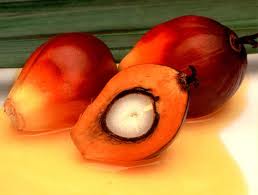
The African oil palm provides two different oils with different properties: palm oil and palm kernel oil. Palm oil is made from the fruit of the tree, and palm kernel oil comes from the seed, or "nut," inside the fruit. You can find it on ingredient lists under a number of names, including palmitate, palmate, sodium laureth sulphate, sodium lauryl sulphate, glyceryl stearate, or stearic acid. Palm oil even turns up in so-called "natural," "healthy," or even "cruelty-free" products, like Earth Balance (vegan margarine) or Newman-O's organic Oreo-like cookies. Palm oil is also used in "renewable" biofuels.


A hectare of land (2.47 acres) produces, on average, 3.7 metric tons of palm oil, 0.4 metric tons of palm kernel oil, and 0.6 tons of palm kernel cake. (Palm kernel cake is used as animal feed.) In 2009, Indonesia produced over 20.5 million metric tons, and Malaysia produced over 17.5 million metric tons. As of 2009, the U.S. was only the seventh largest importer of palm oil in the world, but as the second largest importer of palm kernel oil, it ranks third in the world as a driver of deforestation for palm oil plantations.


Indonesia has lost 46 percent of its forests since 1950, and the forests have recently disappeared at a rate of about 1.5 million hectares (an area larger than the state of Connecticut) per year. Of the 103.3 million hectares of remaining forests in 2000, only 88.2 million remained in 2009. At that time, an estimated 7.3 million hectares of oil palm plantations were already established, mostly on the islands of Sumatra and Borneo. Indonesia plans to continue the palm oil expansion, hoping to produce an additional 8.3 million metric tons by 2015 -- this means a 71 percent expansion in area devoted to palm oil in the coming years.

At stake are not only endangered species and human lives, but carbon emissions. One of the ecosystems at risk is Indonesia's peat swamps, where soil contains an astounding 65 percent organic matter. (Most soils contain only two to 10 percent organic matter.) Laurel Sutherlin of Rainforest Action Network describes the draining and often burning of these peat swamps as "a carbon bomb." Destruction of its peat swamps as well as its rainforests makes Indonesia the world's third largest carbon emitter after the U.S. and China.

Among the horror stories coming out of Southeast Asian palm oil plantations are accounts of child slave labor. Ferdi and Volario, ages 14 and 21, respectively, were each met by representatives of the Malaysian company Kuala Lampur Kepong in their North Sumatra villages. They were offered high-paying jobs with good working conditions, and they jumped at the opportunity. According to an account by Rainforest Action Network: "The two worked grueling hours each day spraying oil palm trees with toxic chemical fertilizers, without any protection to shield their hands, face or lungs. After work, Ferdi and Volario were forced inside the camp where they'd stay overnight under lock and key, guarded by security. If they had to use the bathroom, they'd do their best to hold it until morning or relieve themselves in plastic bags or shoes." They escaped after two months and were never paid for their work.


What is the industry doing about such horrific claims? It has established the Roundtable on Sustainable Palm Oil (RSPO). Kuala Lampur Kepong, Wilmar International, and Archer Daniels Midland are all members, and so are their customers, Cargill, Nestlé and Unilever, as well as environmental groups like the World Wildlife Fund and Conservation International. But, according to Sutherlin, membership in RSPO means nothing -- other than that an organization paid its dues. "That's the first level of greenwash," says Sutherlin.

RSPO certifies some products and companies, and Sutherlin says that does have some meaning, but leaves major loopholes open. For example, there are no carbon or climate standards, and there have been problems with the implementation of social safeguards. "It's been a spotty record about their ability to enforce the standards for how people are treated and how communities are affected," notes Sutherlin. Yet, he says, RSPO is "the best game in town."

Rather than simply relying on RSPO's certification, Rainforest Action Network has focused its campaign on the U.S. agribusiness giant Cargill, which has a hand in fully 25 percent of palm oil on the global market. Rainforest Action Network is asking Cargill to sign on to a set of social and environmental safeguards and to provide public transparency on its palm oil operations. If Cargill cleans up its act, perhaps it will help put pressure on other major multinationals like Unilever, Procter & Gamble, and Nestlé, which also source palm oil from unethical suppliers like Wilmar International.
Journalists have also criticized environmental groups for "cozy relationships with corporate eco-nasties." The World Wildlife Fund has come under attack for its partnership with Wilmar, the corporation that attacked a Sumatran village. Its involvement in RSPO serves as a reminder of the accusations in a 2010 Nation article, which claimed that "many of the green organizations meant to be leading the fight are busy shoveling up hard cash from the world's worst polluters--and burying science-based environmentalism in return." (WWF says it received no payment from Wilmar in this particular case.)

The ugly issue of palm oil even touches the beloved American icon, the Girl Scout cookie. When Girl Scouts Madison Vorva and Rhiannon Tomtishen began a project to save the orangutan for their Bronze Awards, they discovered the link between habitat loss and palm oil. Then they looked at a box of Girl Scout cookies and found palm oil on the list of ingredients. The two 11-year-olds -- who are now ages 15 and 16 -- began a campaign to get the Girl Scouts to remove palm oil from its cookies.


It took five years to get a response from the supposedly wholesome Girl Scouts USA (whose 2012 slogan is "Forever Green"). While the organization ignored its own members for several years, it was unable to ignore the coverage the girls received from Time magazine, the Wall Street Journal, and several major TV networks. Once the story was so well-covered by the media, Girl Scouts USA responded, promising it would try to move to a sustainable source of palm oil by 2015. In the meantime, it would continue buying palm oil that could have come from deforested lands or plantations that use child slave labor, but would also buy GreenPalm certificates, which fund a price premium that goes to producers following RSPO's best practice guidelines.

So what should consumers do? For the time being, avoiding products containing palm oil is probably your best bet. Since palm oil is so ubiquitous this will likely mean opting to buy fewer processed foods overall. Don't forget to check your beauty and cleaning products, too. In a handful of cases, such as Dr. Bronner's soaps, palm oil comes from fair trade, organic sources. But this is hardly the norm, and with the immense amount of palm oil used in the U.S., it's unlikely that sustainable sources could cover all of the current demand.
~~~~~~~~~~~~~~~~~~~~~~
Jill Richardson is the founder of the blog La Vida Locavore and a member of the Organic Consumers Association policy advisory board. She is the author of Recipe for America: Why Our Food System Is Broken and What We Can Do to Fix It..

Sunday, October 2, 2011

Goebbels' secretary, 100, breaks vow of silence.


He got away lightly with suicide': Goebbels' secretary, 100, breaks vow of silence to reveal secrets of Hitler's propaganda minister.


From:
http://www.dailymail.co.uk/news/article-2031365/Goebbels-secretary-100-breaks-silence-cold-distant-monster-Germans-hate-Jews.html


By Allan Hall, In Berlin

The former secretary of Hitler's propaganda chief Joseph Goebbels has broken a 66-year vow of silence to talk about her service for the man who made Germans hate the Jews.


Since the end of World War II, Brunhilde Pomsel, now 100, has refused all requests for interviews and offers to publish her memoirs.

But after five months of negotiations she has given a single interview to Bild, Germany's biggest newspaper, in which she describes her four years as the chief secretary of the man closest to Hitler.


Hitler's master propagandist Joseph Goebbels rabble-rousing a crowd. His secretary Brunhilde Pomsel, who has given her first interview, was employed by Goebbels from 1942 until the end of the war in May 1945.

Frau Pomsel describes how Goebbels' children - the children he and his wife Magda would murder with cyanide in Hitler's bunker in April 1945 - used to play with her typewriter on Sunday afternoons.


She reminisces about eating goose with the Reich's propaganda minister at his island home outside of Berlin and of receiving dresses from Magda because Allied bombs destroyed her own home and everything in it.


More...

She took down every word that Goebbels uttered, both his private correspondence and his official orders, including those ordering round-ups of Jews in Berlin to please Hitler that the capital was becoming 'Jew-free'.


Frau Pomsel was employed by Goebbels from 1942 until the end of the war in May 1945. But while his propaganda presented himself to the German people as a jovial fellow Nazi, she remembers him as a cold and distant monster.

'You couldn't get close to him,' said Frau Pomsel. 'He never once asked me a personal question. Right up until the end I don't think he knew my name.

'He got away lightly with suicide. He knew he would be condemned to death by the Allies. His suicide was cowardly, but he was also smart because he knew what was coming if he didn't take that way out.


Joseph Goebbels, his wife Magda and three of their children with Adolf Hitler in the Bavarian Alps.

The children would all be murdered by Magda in Hitler's bunker in the final days of the war. She and Joseph then committed suicide.
'I was working as a typist at the propaganda ministry, and his radio station, and was the fastest. It was an order to be transferred to work for him. You couldn't refuse.

'I didn't know about the Holocaust. I was a stupid, politically uninterested little sausage of simple means. I only learned about the Jewish extermination programme after the war. Goebbels never mentioned it in his correspondence.

'I joined the party in 1933 - why not? Everyone did. I worked with three other secretaries in a wonderful library in a palace on the Wilhelmplatz in Berlin.

'A lot of the stuff I did was somewhat boring. But I gradually became his chief stenographer, recording everything that gushed out from him and from his chief aides.

'I wanted to live up to this ideal that if a boss trusted me, then I mustn't disappoint him.'

Frau Pomsel recalls how Goebbels ordered her and three junior secretaries on February 18, 1943, into the Sportspalast Stadium in Berlin. It was shortly after the defeat of the German Sixth Army at Stalingrad, the turning point of the war from which there was no way back.

  The Berlin Sportspalast filled to capacity for Goebbels' 'Total War' speech on February 18, 1943.

It was given shortly after the defeat of Germany's Sixth Army in Stalingrad, a turning point in the war.
On this day Goebbels delivered his infamous 'Total War' speech to the German public, exhorting them to heights of frenzied sacrifice as he warned of a wave of vengeful, barbaric Russians bearing down on the Fatherland.

She recalled: 'This was a service order, we had to attend. Magda Goebbels sat directly behind me as he raged.


'The photos show the crowd going wild as he asked them if they wanted total war and springing to their feet to give the Hitler salute. I wasn't as jubiliant as them. I knew what was coming...'

As chief secretary, Frau Pomsel had access to top-secret papers which showed how badly the war was in fact going for Germany.

She spent the last 10 days of the Third Reich in the cellars of the propaganda ministry. Russian artillery and American bombers flattened the city by day, RAF aircraft by night.

In this troglodyte world she pumped out the orders from Goebbels exhorting more and more resistance to a people crushed under the weight of the lost war.

'On May 1 the news came that The Boss - Hitler - had committed suicide the day before. The Russians came shortly afterwards and dragged me from the cellar. I spent the next five years as a prisoner of the Russians in special camps,' said Frau Pomsel.

It was only after the war that she learned Goebbels and his wife killed their six young children by breaking cyanide vials in their mouths.

Goebbels then shot his wife before shooting himself. Aides poured petrol on the corpses but the remains were only partially burned and found by the Red Army.

'I will never forgive Goebbels for what he brought into this world,' said Frau Pomsel. 'And the fact that he could murder his innocent children in this way.

'I never believed also that I would have a happy life after working for him. But I found a way somehow.'

Read more: http://www.dailymail.co.uk/news/article-2031365/Goebbels-secretary-100-breaks-silence-cold-distant-monster-Germans-hate-Jews.html#ixzz1YaJT6hne

Wednesday, September 7, 2011

Why the Breakfast Most Americans Will Eat Today Is a Corporate Scam.

Just one of many unhealthy breakfast fares.
 
 
This article is just the tip of the iceberg on the scandal of commercial food. Breakfast food is a tiny segment of this very unhealthy undustry.
~~~~~~~~~~~~~~~~~~~~~~~~~~~~

As seen on:

 
Wake up and smell the McCafé: Cold cereal, donuts and orange juice are breakfast staples because somebody somewhere wanted money.
Breakfast in America is a corporate scam.
 
Not all of it. But nearly every breakfast staple -- cold cereal, donuts, yogurt, bagels and cream cheese, orange juice, frappuccino -- is a staple only because somebody somewhere wanted money. Wake up and smell the McCafé.

Seeking to provide sanitarium patients with meatless anti-aphrodisiac breakfasts in 1894, Michigan Seventh-Day Adventist surgeon and anti-masturbation activist John Kellogg developed the process of flaking cooked grains. Hence Corn Flakes. Hence Rice Krispies. Hence a rift between Kellogg and his business partner/brother, who wanted to sweeten Kellogg's cereals in hopes of selling more. Guess who won.

In pre-Corn Flakes America, breakfast wasn't cold or sweet. It was hot, hearty and lardy, and it had about 4,000 calories. "Breakfast was the biggest meal of the day. Eaten before you headed out to do a whole day of farm chores, it had to keep you going until dinner," says food historian Andrew F. Smith, author of Eating History: Thirty Turning Points in the Making of American Cuisine (Columbia University Press, 2009). Pre-industrial Americans loaded up on protein-rich eggs, sausages, ham and American-style belly-fat bacon along with ancient carb classics: mush, pancakes, bread.
The Great Cereal Shift mirrored -- and triggered -- other shifts: Farm to factory. Manual to mechanical. Cowpuncher to consumer. Snake-oil superstition to science. Biggest of all was food's transition from home-grown/home-butchered to store-bought.

"Cold cereals are an invention of vegetarians and the health-food industry, first through Kellogg's and then through C.W. Post, which steals all of Kellogg's ideas," Smith explains.

"These companies realized early on that people like sugar, and kids really like sugar -- so they shifted their sales target from adults concerned about health to kids who love sugar. It's a thoroughly American invention."

As is orange juice, another breakfast contrivance marketed as healthy for kids. Media buzz about vitamin C and advances in pasteurization spawned the orange-juice industry in the 1930s, turning an obscure luxury into a household necessity.

"Orange juice has come to symbolize purity in a glass," writes agriculture expert Alissa Hamilton in Squeezed: What You Don't Know About Orange Juice (Yale University Press, 2009). Her research reveals a highly processed product whose use of cheaply grown foreign fruit now mandates a massive carbon footprint:
"Orange juice marketers have succeeded in creating an aura of golden goodness around the product. The idea that orange juice is 'an essential part of a balanced breakfast' is familiar and for the most part unchallenged."
Hamilton is outraged that commercial orange juice is "advertised as pure, fresh, and additive-free. Those who buy orange juice buy the stories that the industry tells."
Major companies use "flavor packs" engineered by the same firms that create perfumes for Dior and Calvin Klein to make their juice smell and taste "fresh" despite its long shelf life:
"Flavor packs aren’t listed as an ingredient on the label. ... The formulas vary to give a brand’s trademark taste. If you’re discerning, you may have noticed Minute Maid has a candylike orange flavor. That’s largely due to the flavor pack Coca-Cola has chosen for it."
Tropicana, meanwhile, is owned by PepsiCo.

"Ask yourself why, like most people, you drink orange juice," Hamilton urges. "You probably say the reason is that it is good for you, or that it is high in vitamin C, or that you grew up drinking it and like it. If so, then I must frankly tell you that, when it comes to orange juice, you are acting like a robot."
Although popular on this continent since the early 19th century, donuts were a dessert not specifically associated with breakfast until Dunkin' Donuts popularized that notion in the 1950s.

Bagels were an ethnic niche item until Connecticut-based Lender's established the first fully automated frozen-bagel factory in 1965. Cream cheese was not a breakfast cheese before Kraft began promoting its Philadelphia cream cheese (made in New York).

"In the 1970s, bagels and cream cheese became part of the American breakfast experience," Smith says. "Meanwhile, chocolate milk was an invention of Nestle," which in 1948 premiered its Nestle Quik powder, ancestor of today's Nesquik.

Traditional elsewhere, yogurt was considered freakish in the US when General Mills began promoting it heavily as a "health food" in the early 1970s. The US yogurt industry is now worth over $4 billion a year. A single one-serving container of General Mills-owned Yoplait fruit yogurt contains 28 grams, or seven teaspoonsful, of sugar. (Health food?)

While coffee and tea have been in this country since colonial days -- hence the Boston Tea Party -- Smith sees them driving the latest breakfast revolution.

This one too is corporate.

"When Starbucks shifted from selling beans to selling coffee drinks in the '80s, that created something very different in the United States." Traveling in Italy, Starbucks founder Howard Schultz observed ordinary Italians deeply concerned about the quality and flavor of every cup of coffee they drank.
"Schultz saw that as something Americans would buy into. In fact, they did -- and that set everything else in motion. Starbucks created the coffee-breakfast industry in this country. What they're selling is an experience. That's an incredible shift."

Before Starbucks, "coffee in America was generic. It didn't have to taste good. But now everybody's talking about this special blend that just came in yesterday from Guatemala."

They're talking about it not just at Starbucks, Tully's, Peet's and Au Bon Pain. They're talking about it at McDonald's. Burger King sells Starbucks-owned Seattle's Best. McDonald's promotes its McCafé as a "unique blend of fresh espresso beans [that] results in a high-impact, full-bodied, dark-roast coffee with flavor attributes that enhance its complexity, like spicy and earthy tones and a slight caramel sweetness." Touché.

By switching from cheap to premium coffee, fast-food chains are now rebranding themselves from fast to -- well, slow; as the type of place where patrons linger sipping legit lattes, using free wi-fi and nibbling breakfast food -- which is how these chains earn most of their money, Smith explains.
"The fast-food industry makes far more profit on breakfast than on anything else. In those first four or five hours of the day, they do a huge business."

Fast-food breakfasts cost little to make: Cheap carbs, eggs and processed cheese augment meat portions that are smaller than those used in burgers -- "and it's pork, which is cheaper than beef," Smith says. Burger King added Quaker Oatmeal to its menu in August.
A five-ounce order of Sausage McGriddles contains 420 calories and 22 grams of fat. That's a lot, but not compared to pre-Kellogg's breakfasts in America.

"One hundred and fifty years ago, Americans consumed two to three times more calories per day than they do now" -- mostly at breakfast, Smith says. Yet obesity and diabetes weren't at epidemic proportions "because half of Americans still lived on farms or did manual labor in cities."
And now we don't. We wake up, eat dessert, then sit. Breakfast in America today is disconnected from class, career, ethnicity and the functionality of bodies burning fuel. Its history is hewn of cravings, insecurities, subliminalities and false confidence conjured by strangers who tell us how to start our days, because they can.

Anneli Rufus is the author of several books, most recently The Scavenger's Manifest

Sunday, September 4, 2011

A sad and revealing tribute to Labor Day - The uprising of '34.


In 1934, Southern textile workers took the lead in a nationwide strike that saw half a million walk off their jobs in the largest single-industry strike in the history of the United States. For a time, these new union members, in response to New Deal legislation, stood up for their rights and became a force to be reckoned with in the South. Then management moved in and crushed the strike. Some mill workers were murdered, thousands more were blacklisted, and many were so intimidated that "union" became a dirty word in Southern communities for decades to come.


Little known, barely publicized, rarely acknowledged in history books, the General Textile Strike of 1934 remains a stirring, yet amazingly forgotten chapter in Southern history. The Uprising of '34, a film by famed documentarian George Stoney and independent filmmakers Judith Helfand, (Producer of Blue Vinyl and other documentaries), and Susanne Rostock, examines this hidden legacy of the labor movement in the South and its impact today. For decades, it seemed as if all memory of the General Textile Strike had been buried with the workers who died in its front lines. Stoney and Helfand spent nearly six years tracking down and interviewing surviving strikers and their relatives in Georgia, Alabama, Tennessee, and North and South Carolina.


The Uprising of '34 is a startling documentary which tells the story of the General Strike of 1934, a massive but little-known strike by hundreds of thousands of Southern cotton mill workers during the Great Depression. This is a heartfelt testimony, often spoken for the very first time, contains extraordinary archival footage of the strike itself and the miserable working conditions that led to the walk-out. Mill owners' non-compliance with New Deal legislation resulted in speeded-up production, which forced workers to produce the same in eight hours that they used to in 12 and for wages far below the federal government's newly established minimum.

The mill workers' defiant stance — and the remarkable grassroots organizing that led up to it — challenged a system of mill owner control that had shaped life in cotton mill communities for decades. Sixty years after the government brutally suppressed the strike, a dark cloud still hangs over this event, spoken of only in whispers if at all.
 Excerpted from:

Wednesday, August 31, 2011

What's It Going to Take for Americans to Stop Eating Chemical-Laden Industrial Food?


This is a topic that's near and dear to my heart!
~~~~~~~~~~~~~~~~~~~~~~~~~~~~~~~~~~~~~~~~
 

The simple act of sitting down together to eat real food on a regular basis can jumpstart the kind of lively discussions that get people engaged on the issues of the day.

As seen on:


By Kerry Trueman
Laurie David is a force of nature when it comes to lobbying on behalf of Mother Nature. An author, film producer and environmental advocate, she's best known as the producer who convinced Al Gore that his climate-change slide show could reach a lot more folks if he made it into a movie.

David's still concerned about melting glaciers. But her current campaign tackles another kind of erosion; the loss of community, civility and informed debate in our culture. Her latest book, The Family Dinner: Great Ways to Connect with Your Kids, One Meal at a Time, makes the case that the simple act of sitting down together to eat real food on a regular basis can jumpstart the kind of lively, enlightening discussions that get our friends and family engaged on the issues of the day. And isn't that the first step to pulling our civic discourse out of its muddied ditch?

She addressed this subject at the Omega Institute's Design By Nature conference in Rhinebeck, New York recently, and kindly agreed to answer a few questions while she was in my neck of the woods. So, with the historic Hudson River Valley--widely regarded as the birthplace of the modern environmental movement--as our backdrop, I sat down with David for a chat about where our country's at.

Kerry Trueman: How does this new mission to revive dinner table discussions mesh with your environmental advocacy? Is conversation the gateway drug to conservation?
Laurie David: There are all kinds of environments. But the very first one we learn anything at is our family environment. I have teenage daughters, and I see from my own personal experience, how grateful I am that I insisted on this ritual of family dinner. It's not just about eating, it's about all the things that happen at the table that we're not even conscious of.

Everything that you worry about as a parent is improved by sitting down to regular meals. This is how we raise civil children, this is how we pass on our values. If we let go of this, we'll be letting go of the very basic things that teach us how to become part of the community, and how to care about the world.
Kids are spending something like seven and a half hours a day looking at some form of screen, and that doesn't include texting time! I call it digital overload. They're not outside playing, they're not spending time with their family. We're not even watching TV together anymore, everyone's on their own separate computer.

That's why it's critically important to hold onto the one ritual that the day gives you, so that everyone can stop leading separate lives and come together. I hope that my book will help make it easy for them. There are some amazing recipes, but also great conversation starters. For some people, it's just as difficult to figure out what to talk about at dinner as it is what to make for dinner.
We have to alleviate the pressure on ourselves that dinner has to be this fancy affair, three courses and a homemade apple pie. If you're having peanut butter and jelly sandwiches on whole grain bread, that's good enough. The key to the whole thing is sitting down and connecting.

KT: I'd like to borrow a question that Prince Charles asked in a speech at the Washington Post's Future of Food conference earlier this year: "Why it is that an industrialized system, deeply dependent on fossil fuels and chemical treatments, is promoted as viable, while a much less damaging one is rubbished and condemned as unfit for purpose?"

LD: Why are we going down this industrial food supply road? I think the answer is money. This is part of what's exciting to me about the new food movement--we have the individual power to opt out of that system. And if we care about our health, if we care about the planet, we're going to have to do that.

But it's doable. And every piece of this, all the solutions to the factory farms, the industrialization of our food supply, and all the chemicals and antibiotics that are in our food, this is completely doable for us as individuals. We have to start cooking at home, again, we have to start buying fresh ingredients, organic if possible, locally, if possible.

We have to reject the trillion-dollar processed-food industry that's taken over our lives. Instead of buying salad dressing at the supermarket with 19 ingredients, we should be taking the three ingredients and the four minutes it takes to make salad dressings at home.

We have to just opt out of that system and start supporting food locally to the best of our ability. It's not about being perfect. "Perfect is the enemy of the good," I totally believe that.

It's about saying, you know what? I can decide for myself how many chemicals I'm putting in my body, how many preservatives. All the repercussions of supporting that system, I can choose to opt out of that, and I can educate my small circle of friends.

You can choose to do better. A perfect example is Meatless Monday. I have a chapter about it in my book, and I make all the arguments you can discuss at the dinner table. You can decide, as a family, we're going to get off this treadmill of eating too much meat. We can't sustain this, it's not healthy for our bodies, it's not healthy for the planet, and it's a big myth that this is the only source of protein we can consume.

You want to help global warming issues? Start eating a little less meat. That's a small but perfect example of how powerful the individual can be. And then educate your friends and family.
KT: Speaking of educating folks, Bill Gates is putting his faith and some of his considerable resources into promoting biotech, agribiz-as-usual solutions for feeding the world. If you happened to cross paths with him, how would you try to persuade him to scrap the GMOs and really get behind regenerative farming methods?

LD: I would ask him, what do you want to eat at the end of the day? What's interesting to me is to find out what people who are part of the industrial/chemical system of growing food are eating themselves. I once ran into a gentleman who worked for a huge tomato company. You know, if you buy tomatoes from Florida off-season, they're picked green and gassed to turn them red. This is a gazillion-dollar industry.

And I said, "Do you eat these tomatoes?" He said, "Oh, I could never eat those! We eat organic food."
I don't understand the arrogance we have as a country that we can do things better than Mother Nature can. We have to go back to being humble, to respecting what Mother Nature provides us, and stop screwing with the system because we think we can do it better.

The oceans are being depleted, the air is being destroyed, because of us. The climate--who ever thought you could screw with the climate? But we're doing it, and it's not an opinion, it's not a theory, it's not a belief, it's a fact. The globe is warming and humans are causing it.

And the fact that we're not running to solve this problem when all the solutions already exist is just mind boggling to me.

KT: Neil Young once sang that "even Richard Nixon has got soul." Well, at least he gave us the Environmental Protection Agency. Now Republicans want to abolish the EPA. Why don't today's conservatives embrace conservation? And how did contempt for science become so rampant?

LD: The EPA, the Clean Air Act, the Endangered Species act, they all had support from both sides. I don't understand it, honestly, I don't have an answer for it. You would think they would care just as much about clean air and water and protecting public lands as you and I do. The only explanation is that it comes down to greed and arrogance--arrogance that we're not going to run out of our natural resources.

The biggest problem we're facing is that people are getting misinformation from advertising, from politicians who are tied to lobbyists who are tied to corporations. It's very difficult to move forward on things when people are misinformed. We have to work on getting back to truth, inconvenient or not.

Friday, August 19, 2011

If Jesus Came Back…

As seen on:

http://theinsanityreport.com/home/index.php/2009/09/11/random-thoughts/if-jesus-came-back/

By Kriss

If Jesus came back…Glenn Beck would have his roving band of lunatics pressuring the White House to distance themselves from his “Socialist” beliefs.

If Jesus came back…Sean Hannity would label him an enemy of Israel and therefore Enemy #1 of the United States.

If Jesus came…back Lou Dobbs would be ranting and raving every day about how Hey-Zues and his “12 disciples” were in this country illegally.

If Jesus came back…Orly Taitz and other Birthers would be demanding to see his birth certificate.

If Jesus came back & talked about diversity…Glenn Beck would go on Fox & Friends & call him a racist with a deep seated hatred of white people.

If Jesus came back…the Bush Administration would have locked him in Gitmo & waterboarded him 183 times for the location of his 12 disciples.

If Jesus came back…and he promoted talking to and be understanding of our Muslim brothers/sisters, Darth Cheney would call him a traitor.

If Jesus came back…in the middle of Jesus’s speech to the world about peace & love, Joe Wilson would stand up and shout “You Lie”.

If Jesus came back…Republicans would fight giving him more funding to feed the poor cause the poor should just work harder.

If Jesus came back…the GOP would protest him giving a “Back to School” speech for fear of “indoctrination” because of his communist beliefs.

If Jesus came back…most people on the right wouldn’t know cause he’d be working for some “community organizer” group.

If Jesus came back…he’d probably be on the terrorist watch list.

If Jesus came back…his trial wouldn’t have been public. He would have been renditioned to a country with lax torture laws.

If Jesus came back…Sarah Palin would talk about how he palled around with terrorists, thieves, hookers and pimps.

If Jesus came back…Fox & Friends would ask if he went to school at a Madrassa.

If Jesus came back…Glenn Beck would use a Youtube video of him using a little boy’s 7 loaves of bread and a few fish to feed the poor as proof he wants to “Spread the Wealth”.

If Jesus came back…Fox News would have the following headline: “Jesus of Nazareth…Savior or Communist Community Organizer? We Report, You Decide”.

If Jesus came back…he’d have to remove his sandals like everyone else in the security line at the airport.

If Jesus came back…Michael Steele would appear on Meet the Press talking about how Jesus is rationing miracles.

If Jesus came back…Right Wing blogs would talk about how Jesus’ apostle Peter supported euthanasia.

If Jesus came back…the RNC would sue him for copyright infringement.

If Jesus came back…and gave a speech about “Laying down our arms”, the NRA and their members.
 would show up to his sermon with assault rifles and signs that said “Pry it from my cold dead hands”.