Tuesday, March 6, 2012

Big Food Must Go: Why We Need to Radically Change the Way We Eat.

This is not a problem we can solve by going vegetarian or vegan, or buying organic and fair trade.
Editor's note: Find Christopher D. Cook's book, Diet for a Dead Planet: Big Business and the Coming Food Crisis, here.

It is no longer news that a few powerful corporations have literally occupied the vast majority of human sustenance. The situation is perilous: nearly all of human food production, seeds, food processing and sales, is run by a handful of for-profit firms which, like any capitalist enterprise, function to maximize profit and gain ever-greater market share and control. The question has become: What do we do about this disastrous alignment of pure profit in something so basic and fundamental to human survival?

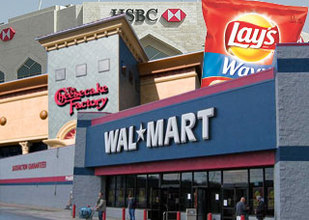
It is time -- now, not next year -- to de-occupy Walmart. And Archer Daniels Midland. And Tyson Foods. And Monsanto. And Cargill. And Kraft Foods. And the other large corporations that decide what ends up on our plates. Take all our money out, public and personal, from our shopping dollars to school district lunch contracts to the corporate subsidies that uphold these firms' grip on our food supply, and invest it in a new system that's economically diverse and ecologically sustainable.

These corporations' stranglehold over food has wreaked havoc on the environment, our health, farmers, workers, and our very future. It is time for an end to Big Food, and a societal shift to something radically different. We all deserve a future where what we eat feeds community and land, instead of eroding soils, polluting water and air, and tossing away small farmers and immigrant workers as if they were balance sheet losers.

"Occupying the food system" has emerged as a rallying cry as activists and movements across the country, from Willie Nelson to more than 60 Occupy groups are turning up the heat on "big food" in nationwide actions today. Across the US, online and offline, thousands will be protesting icons of corporate control over food such as Monsanto and Cargill, and literally occupying vacant lots and tilling long-ignored soils in a mass-scale rejuvenation of community-led food production. (Find out more about the day of action here.)

"We want to ignite a robust conversation about corporate control of our food supply," says Laurel Sutherlin, communications manager for Rainforest Action Network, a lead organizer in this growing coalition of food system occupiers. "Occupy has opened a national dialogue about inequality and the dangers of surrendering our basic life-support systems over to corporate control."

The idea that food ought to be spared from the all-consuming machinery of corporate control has gained wide currency, but what does it mean to "occupy" and revamp our food system? Apart from our desire for local heirloom produce and artisanal cheeses, or to save the family farm, what's wrong with a few corporations controlling our food supply?

"Occupying the food system is about taking it back from the corporations for the communities and for the people," says Erin Middleton of the California Food and Justice Coalition. "Access to good, healthy, affordable food is a basic human right that has been interfered with in the current capitalistic food system."

Beyond any aesthetic concerns about local versus multinational, or slow food versus fast food, the well-documented reality is that Big Food has attained phenomenal and destructive power over what we eat -- our diets, our health and the planet.

Consider a few quick facts:
  • Four corporations, led by Walmart, control more than half of grocery sales. Walmart alone gets more than one quarter of every grocery dollar spent in the U.S.
  • Three companies -- Monsanto, DuPont and Syngenta -- own 47 percent of the world's seeds. And they own 65 percent of the global proprietary maize market.
  • Nearly every major commodity -- wheat, corn, soy -- is controlled by just four corporations.
  • Just four corporations control more than 80 percent of all our meat supply.
  • According to USDA statistics, America loses more than 17,000 farmers a year -- one every half an hour.
This corporate occupation of our food isn't just unfair and wrong; it's impractical and destructive. It's ruining farmers, the land and our future food supply.

This Big Food system produces an astounding 1.3 billion tons of animal waste every year. It sprays half a million tons of toxic pesticides on our food each year. We are literally eating oil, as author Rick Manning has put it: annually 400 gallons of fossil fuel per person, 100 billion gallons a year as a nation. Rivers and streams across America are polluted by this industrial agriculture, which is now a major contributor to climate chaos -- and we're all paying for it.

But at least these corporations feed the world, right? Wrong. Worldwide, more than 850 million people go hungry every day. In the U.S., 48 million people, including 16 million children, do not have a reliable, secure food supply. Twenty percent of families with children are food-insecure.

Why all this hunger amid a global food bounty in which UN Food and Agriculture Organization data show we have far more than enough to feed everyone? Poverty. Unemployment. Underemployment. Here in the U.S., stagnant wages have combined with rising costs for everything to make simply feeding oneself a major economic stressor. We cannot separate "food issues" from economic justice issues. And the corporations that control our food supply are directly to blame.

But at least McDonald's, Walmart, Safeway, et al. offer us "cheap" food, right? Wrong again. We pay more than $100 billion a year in medical costs due to diet-related diseases from Big Food's relentless production and marketing of junk "food" and highly processed foods. We pay countless more dollars for injured and maimed workers who risk life and limb daily on the fast-food assembly line; for environmental cleanups from factory farms' rivers of toxic waste; and we pay roughly $15 billion a year, sometimes more, to subsidize corporate agribusiness commodities like corn and soy -- our tax dollars financing unhealthy sweeteners for soda, and fast food, all those burgers and fries that seem so cheap.

Then there is the brutal sweatshop-style labor we eat. All our food today relies on terribly exploited workers, both in the U.S. and abroad. Our daily meals rest on underpaid, impoverished immigrants, tens of thousands of whom are injured each year. We cannot continue to ignore the abuse of people, land and animals by the corporations that claim to feed the world.

We cannot solve this simply by going vegetarian or vegan, or buying organic and fair trade. The very market that has created this Big Food disaster -- the market that creates monopolies and monocultures -- cannot solve these deep systemic crises. To truly "occupy the food system" we will need nothing less than a fundamental restructuring of the economics and policies that currently enable our corporate food system.

There are great things happening on the good food margins today -- local foods movements, more urban agriculture and community gardens, school gardens, small sustainable food companies, victory gardens, even some fairly radical small-scale entrepreneurialism. But we need something much bigger. We need a radical overhaul of our current food and agriculture system -- and of how our tax dollars are spent on food.

Here are a few ideas. We must pressure Congress, through education, protest and targeted campaigns, to end agribusiness subsidies and begin spending our money on sustainable healthy foods and farming. Pass a 2012 Farm Bill that not only ends subsidies for corporate agribusiness, but that reinvests public money in an economically diversified, ecologically sustainable and more locally-oriented food system. It can be done. Shift the agribusiness subsidies to fund small and mid-sized organics; subsidize smaller-scale organics, and living-wage jobs in organic farming; create public investments for local and regional sustainable agriculture, both rural and urban; stop all food industry mergers today; and ban corporate representatives from all aspects of government food policymaking-no more corporate lobbyists and advisors deciding our nation's food, farming, and nutrition policies. No more revolving door between government and agribusiness. Period.

Beyond that, we need to break up the food oligopoly. Reform anti-trust law so these companies can't control entire food and seed markets. Cargill, for instance, the world's largest privately held corporation, not only controls a huge portion of the global grain business, but it also has a near monopoly over entire regions of American grain elevators, where farmers sell their crops. For the future of the environment and local economies, we must also redistribute land from corporations and agribusiness to small sustainable farms, and reverse the long trend of huge subsidized landholders buying out the family farm.

A few more ideas: Tax fast food corporations at the point of production (not sale, where it just hurts low-income consumers) and use the money to create sustainable urban farms. Create a federal New Deal for Food that invests in a truly sustainable healthy food system that makes good food accessible to all -- reinvesting the dollars we currently throw at agribusiness, into community-driven food production and marketing.

Ultimately, we need to understand that this isn't just a few bad corporations -- this is capitalism doing what it naturally does, exploiting people and land for profit. Even Adam Smith warned of the inherent tendency of capitalism toward ceaseless growth and monopoly power. Whether you're for revolution or reform, let's be honest about the system we're dealing with. Capitalism is unraveling, undermining even its own interests with its tireless demand for more growth, more profits, endless new markets with no protections for local industry, more corporate consolidation and monopoly power over both economics and politics.

Increasingly, activists are making these deeper connections between sustenance and a larger economy. "One of the most important aspects of Occupy the Food System, especially during this time of high unemployment and economic crisis, is rebuilding local economies and creating quality jobs," Tanya Kerssen of Food First wrote in an email to me. "In many communities where unemployment is high and access to healthy food is limited or nonexistent, the food system is an obvious place to start."
Kerssen argues that community-based food production can rebuild and sustain more than just food:, "By localizing the production and consumption of food, we can generate employment along the entire value chain (from production to distribution to retail). We can also rebuild our social fabric, address our health crisis, and significantly reduce our carbon footprint."

Michele Simon, a food policy expert and author of Appetite for Profit, sees the Occupy Big Food actions as "a great opportunity to bring together a rather fragmented good food movement. I'd like to see more connections being made to the industry's massive marketing machine, especially when it comes to children and the impact on public health, which too often gets left out of the food justice critique."

But, Simon adds, "I also think we need much more long-term action. Single-day actions here and there won't cut it when powerful food industry lobbyists are roaming the halls of Congress and state legislatures all over the nation every day of the year. We need to Occupy our political system!"

Indeed, we need to occupy politics, and the economy. Capitalism's endless need for new markets, new products and new lands and people to exploit is putting our entire planet and future in peril. We must re-socialize food and other life essentials. Food is already socialized, but it's corporate socialism: the huge subsidies we all pay, directly and indirectly, to uphold agribusiness.

Reclaiming our food system, says Aaron Lehmer of Bay Localize, "must mean reclaiming control of our land, our labor, and our economy from corporate monopolies. Anything less will leave our communities enslaved by special interests, whose primary goal is extracting more and more value from the common good."
~~~~~~~~~~~~~~~~~~~~~~
Christopher D. Cook is the author of "Diet for a Dead Planet: Big Business and the Coming Food Crisis" (New Press). He has also written for Harper's, the Economist, the Los Angeles Times and the Christian Science Monitor.

Wednesday, February 29, 2012

Does Dry Cleaning Cause Cancer?

A shuttered dry cleaner.


Rarely do I darken the doorstep of a dry cleaner. That's mainly because I am too cheap and lazy; I admit to having inflicted some verboten wash cycles on my few dry-clean-only dresses, followed by a sheepish line dry. The result is usually wrinkly but passable. I'm lucky: As you probably could have guessed, freshly-pressed suits are not the prevailing style at MoJo HQ. But I know plenty of people, especially men, who have to haul their collared shirts to the dry cleaner every week.

Unfortunately, all that dry cleaning takes a toll on the environment. The main reason is the chemical solvent that the vast majority of the nation's 34,000 dry cleaners use: tetrachloroethylene, or "perc" (short for another one of its names, perchloroethylene), which has found its way into soil, streams, and even drinking water. This month, in its first update on perc since 1988, the EPA officially identified it as a "likely human carcinogen." It also changed the chemical's reference dose—the amount of a substance considered to safe to ingest every day—from 0.01 miligrams per kilogram of body mass a day to 0.006 mg/kg, a decrease of 40 percent.

So are dry-cleaned clothes a health risk? The EPA focuses on the environmental effects of perc, emphasizing that it "does not believe that wearing clothes dry cleaned with perc will result in exposures which pose a risk of concern." But David Andrews, a senior scientist with the Environmental Working Group, still sees the practice as potentially risky. "We would still view that as an unnecessary exposure to a probable human carcinogen," he wrote in an email. "So to be cautious, we recommend avoiding conventional dry cleaners (not just for personal exposures, but for the environmental exposures that result from commercial use)."

The good news is that nontoxic dry cleaners are becoming easier to find. Most of them aren't technically "dry" at all; rather, they use liquids. A method called "wet cleaning" involves different water-based soaps and machine settings for various fabric types, while another uses liquid pressurized carbon dioxide. (Bonus: The CO2 used in dry cleaning is typically captured as a byproduct from factories and plants, so it doesn't contribute to greenhouse gas emissions.) A third involves hydrocarbon-based solutions. Andrews considers wet cleaning and liquid CO2 the most environmentally friendly options. Hydrocarbon solutions, he says, are "a step in the right direction"; a drawback, though, is that they are derived from petroleum.


I've found that my local green dry cleaners are a little more expensive than conventional cleaners, but this EPA report (PDF) says they shouldn't have to be: It found that wet cleaning can be economically competitive with dry cleaning, especially if the business doesn't try to do both. It's much more economical, according to the report, to specialize in wet-cleaning. The Federal Trade Commission is currently considering updating its requirements for garment care labels to include a "professional wet cleaning" option, which would be a major boon to the green cleaning industry.

Unfortunately, there's no widespread green-cleaning certification program yet, so your best bet as a consumer is to ask your local cleaners about their processes. You can also check out NRDC's handy and comprehensive guide to dry-cleaning alternatives here. Also take "dry clean only" labels with a grain of salt; Ecosalon has some tips on which fabrics are safe to wash at home.
~~~~~~~~~~~~~~~~~~~~~~~~~
Kiera Butler is the articles editor at Mother Jones.

New Study Finds that Rich People are More Likely to Lie and Cheat.


By Sarah Jaffe | Sourced from AlterNet
Bloomberg (yes, the same Bloomberg news outlet owned by multibillionaire New York City mayor, because you can't make this stuff up) reports that a new study in the Proceedings of the National Academy of Sciences found that the "upper class"--their words--are more likely to behave unethically than those of us with less money.


The “upper class,” as defined by the study, were more likely to break the law while driving, take candy from children, lie in negotiation, cheat to increase their odds of winning a prize and endorse unethical behavior at work, researchers reported today in the Proceedings of the National Academy of Sciences.


Taken together, the experiments suggest at least some wealthier people “perceive greed as positive and beneficial,” probably as a result of education, personal independence and the resources they have to deal with potentially negative consequences, the authors wrote.

Take candy from children? Really now, guys, shouldn't there be limits?


The tests used in the study ranged from studying video to see whether people obeyed traffic laws--those with more expensive cars were less likely to do so--to having people interview a potential job candidate for a short-term job. In the job-seeking case, the participants were told that the job would shortly be eliminated, but the wealthier participants were less likely to tell the candidate that the job wouldn't last.


One more test had participants playing a game in which a computer rolled dice for them, for a chance to win a $50 gift certificate. The wealthier participants once again were more likely to lie about their score, even though the prize was comparatively less to them.


“A $50 prize is a measly sum to people who make $250,000 a year,” one of the study authors told Bloomberg. “So why are they more inclined to cheat? For a person with lower socioeconomic status, that $50 would get you more, and the risks are small.”


If the rich are more likely to lie and cheat for a tiny prize, why do so many still have a hard time believing that the Wall Streeters who helped crash the economy knew that they were doing something wrong?

Tuesday, February 28, 2012

7 Dangerous Lies About Plastic.

Photo Credit: NOAA Photo Library: fish1968 by LCDR Eric Johnson, NOAA Corps.


Big Plastic is big money and survives regulatory scrutiny by creating big spin. Here's what you need to know.
To receive a Ph.D in industrial chemistry in the United States, no American university requires candidates to take even a single toxicology class as part of their course work. We churn out new chemists with the divine power to manipulate the very structure of nature itself, without teaching them the divine wisdom of how to wield that power.


Nearly everything we consume or even interact with these days is made of plastic. The industry that produces plastic, largely represented by the American Chemistry Council (ACC), has an annual budget of over $120 million to protect its interests. But as the plague of plastic that wreaks havoc on our environment slowly gains the attention of policymakers, concerned citizens and the media, the makers of plastic resins and the companies that package their products have become increasingly aggressive about defending their respective bottom lines.


Taking tactics from Big Tobacco's playbook, the industry engages in bully tactics, politician buys and wide-scale misinformation campaigns meant to confuse the public and turn truth to speculation. Big Plastic is big money and survives regulatory scrutiny by creating big spin.


Because of slashed budgets to regulatory agencies, little private-sector money for watchdogging industry, and a lazy mainstream press that simply regurgitates its claims, the petrochemical industry goes largely unchecked. Here are some of the biggest whoppers.


Lie #1: Plastics are safe.
To date, we use over 248,000 chemicals in commerce and we don't know which ones are harmful or safe. Why? Because the vast amount of research on plastics we use in our lives comes from the plastic industry.


Much of the plastic we see on a daily basis we know by its designated recycling numbers 1 through 7. These plastics are not pure; rather, they're a proprietary formulation of additives, some of which have been shown to be endocrine disrupters, carcinogenic and pose countless other health concerns, but very, very little data exists on additives, toxicologically speaking. In the United States, chemicals that make plastics are innocent until proven guilty, leaving the burden of proof of toxicity to the vastly underfunded and under-staffed Environmental Protection Agency. With 248,000 chemicals on the market, don't expect any light shed here anytime soon.


Perhaps the best-known additive is bisphenol-A, or BPA. Though it's gained media traction having been shown to cause sexual mutations, cardiovascular disorders, obesity, and diabetes, the $6 billion annual industry makes the plastics industry protect it fiercely, even though Centers for Disease Control studies have shown that 93 percent of the adult population has BPA present in their urine. BPA has been on the radar of environmentalists for years but few policy victories have been won because industry-funded studies repeatedly don't show adverse effects, though all the independent studies do.


Lie #2: The so-called Great Pacific Garbage Patch does not exist.
In a 25-page report for the Save the Bag Coalition, meant to refute claims made by the media and environmentalists about the presence of plastic in the ocean, attorney Stephen Joseph wrote that the "so-called 'Great Pacific Garbage Patch,' which is alleged to be twice the size of Texas, does not exist." To keep the speculation on the table, industry hammers on a single point; in early 2011, Oregon State University issued a press release titled, "Oceanic "Garbage Patch' Not Nearly As Big As Portrayed By Media" and a huge media storm ensued calling out environmentalists as a result.
Why this press release was so widely distributed is strange, because the woman who issued it isn't even a relevant name in the plastics research world. But seeing an opportunity to pound environmentalists, the plastic industry created a PR blitz sending press releases to media and form letters to lawmakers. What's interesting is that no one can attribute who first made the Texas-sized analogy, and no primary source for the quote exists, though it certainly went viral.


The researcher from OSU, Angelique White, is correct in her assessment from the best available data, but the data available isn't enough by several degrees of scale to accurately predict spatial distribution of plastics in the gyres (which any scientist who works on the issue will tell you, explicitly), or the ocean in general. To do so would mean that 70 percent of the surface of the earth surface had been sampled.


Well, that's not going to happen anytime soon, as research vessels cost about $30,000 a day and funding is very limited in this field, because so many corporate interests that might sponsor such research depend on plastic to deliver their products. What scientists do know is that 200 billion pounds of plastic are produced each year, and that number is on the rise, and mitigation strategies for keeping plastics out of the ocean are failing, horribly. Greenpeace estimates that of the 200 billion pounds produced annually, 10 percent makes it into the ocean.


To date, the best estimate of how much plastic is in the gyres comes from Columbia University. Researchers took all the major data sets (of which there are very, very few) that exist and calculated 73,878,000 pounds of plastic in the area of the gyres, which accounts for just 16 million of the earth's 315 million square kilometers of ocean surface.


Another problem with determining the scale of plastic pollution is that half of the plastics that are made sink and to date no data exists on how much plastic lies beneath the surface of the water. But when speaking only of polyethylene terephthalate (PET) water bottles, a type of plastic that sinks, we know that Americans alone discard 22 billion a year. Scientists who work on plastic in the ocean often refer to it as, "the world's largest dump." But without "conclusive" data, industry can stay on the offensive.


Lie #3: Plastics don't kill sea life or pose a threat to people eating fish.
While occasionally industry will acknowledge that marine animals do eat plastics from time to time, they make a point of stating that they don't know if the plastics are definitively responsible for the animal's death. To date, 177 species of marine life have been shown to ingest plastics and the number is likely to get much higher as more research is done. Recently published evidence has shown that shards of plastic eroded from synthetic clothing in the washing machine is so small that it can enter an animal at the cellular level.


But determining death, or eventual death of an animal based on a necropsy (autopsy for animals) is notoriously difficult in some cases. What's at issue is that again, industry takes advantage of the "unknowns" to make the assertion that their products don't cause morbidity. Scientists can't absolutely know what causes an animal's death unless it lives and dies in a controlled environment. But opening up a turtle stomach and finding pounds of plastic in it might give them a clue. How long would a turtle have survived with this much plastic garbage in his guts?


We know that most types of plastic aren't passed by a turtle and that it wreaks havoc on their digestive systems. We also know that carrying around a stomach full of plastic is going to slow him down and change his natural buoyancy. Sharper plastics, cause gut impaction and the potential for stomach wall and intestinal perforation. In the wild, everything about an animal's health and agility matters in determining his survival quotient.


In December, a study was published in Science Of The Total Environment that looked to see if the digestive juices of turtles could make plastic bags decay. Three common types of shopping bags (including bioplastic) were subjected to the gastrointestinal fluids of Green and Loggerheads turtles. Without exception, the ubiquitous High Density Polyethylene (HDPE) bag showed "negligible" biodegradability -- which means if a turtle can't pass it, he's stuck with it forever.


Beyond turtles, 9 percent of base food chain fish (which represents as much as 50 percent of the biomass of fish in the entire ocean) sampled in the North Pacific have been shown to ingest plastics, and along with it a toxic soup of PAHs, flame retardants, DDE (a persistent form of the outlawed DDT) and PCBs. Concentrations of these chemicals in ocean-borne plastics have been shown to be up to a million times higher than the ambient sea water around it.


Bigger fish eat the fish that eat these toxic bombs and so do humans at the top of the food chain. All humans have levels of these toxins in their blood and men can't get rid of them. Women can only pass the chemicals through the umbilical chord and through breast milk, and thus, a higher and higher chemical burden in the human body will result from generation to generation.


Lie #4: It shouldn't be called "plastic pollution" but rather "marine debris."
What's the most common type of plastic found on the surface of the ocean? According to the Ocean Conservancy's annual report, 11 percent of beach litter is plastic bags. But what happens when a plastic bag enters the ocean? Plastic doesn't biodegrade in any meaningful timeframe, but it photo-degrades. Thin, flimsy plastic like HDPE with a lot of surface area (like the common bag from grocery stores) photo-degrades faster than thicker plastic. Ultraviolet rays from the sun break the polymer chains of hydrocarbon molecules into smaller pieces and what you end up with is small fragments. So, you might not find a plastic bag in the "garbage patch" but you surely will find the remnants of them. Plastic bags are of the class of plastics recyclers refer to as "blow trash" as they tend to be picked up by the wind and blown out to sea. They're huge offenders of plastic pollution as Americans consume more than 100 billion a year.


Keith Christman, managing director for plastics markets at the ACC, maintained that "marine debris" is a better phrase than "plastic pollution" for describing the trash in the ocean even though 90 percent of the contents of the gyres is plastic. Christman, understanding the negative implications of his product's association with the word "pollution," mentioned that it's not just plastic, but derelict fishing gear as well. All modern fishing gear is made of polypropylene, i.e. plastic. This is a sore spot for the ACC, and marine plastics research and education groups that receive funding from the ACC are typically "mandated" to refer to oceanic trash as marine debris to keep the burden of guilt from resting squarely on their shoulders.


Lie #5: "Plastic retail carry-out bags are 100-percent recyclable and made from clean natural gas."
This is a direct statement issued by the American Progressive Bag Alliance to the city of Dana Point, California in a letter regarding a proposed bag ban. That plastic bags are 100 percent recyclable isn't the issue; it's that by and large, they are not recycled. Plastic bag recycling is governed by supply and demand. People assume that if they place a bag in a recycling receptacle this means the bag will in fact be recycled. That's not necessarily true. In order to show (very) modest positive trending in recycling, industry lops all polyethylene (PE) films, wraps and bags all into one category. But for bags discretely, which are high-density polyethylene, the numbers are atrocious. In 2009, the rate for recycling is 6.1 percent; in 2010, the rate is 4.3 percent.


Thus one of the main targets legislatively, is plastic shopping bags. The biggest player in the bag market, Hilex Poly, has become a master of spin tactics to attempt to paint a rosy picture of its business. Hilex, the largest recycler in the US, writes posts on its Web site patting itself on the back for increased recycling rates claiming that PE rates are up from 2009 to 2010. What it fails to mention is the distinction between the different types of PE, and that EPA itself doesn't independently audit the recycling industry, it just compiles industry's reporting.


There's another problem with plastic bag recyclability. According to Mark Daniels of Hilex Poly, only 30-percent post-consumer HDPE can be used to make a new bag, which means 70 percent of a "recycled" plastic bag comes from virgin sources (natural gas). Sometimes, recycled HDPE gets down-cycled into other products like decking materials. The problem here is that plastic decking materials have a lifespan as well, and no strategy for reclaiming them at the end of their lifespan has been introduced to the recycling markets.


When speaking of plastics in general (including plastic bags), even when there is a modest gain in recycling rates, those rates are far outpaced by higher consumption. From 2009 to 2010, plastics generated in the municipal waste stream jumped from 59,660,000 to 62,080,000 pounds. This is an increase of 2,420,000 pounds. In terms of recycling gains, the EPA reports 440,000 more pounds of all plastics recovered from 2009 to 2010.


So, if we subtract the increase in gains in recovery from the increase in generation we still get an increase of plastic generation of 1,980,000 pounds. This is the central conspiracy of the plastics industry tactically. If industry can convince the public that the environmental consequences of their consumption habits are offset by the industry-backed solution of recycling, industry is guaranteed that its bottom line will grow by hoodwinking the public into believing the myth of recycling.


What about natural gas, the stock for plastic bags? It is becoming scarcer and dirtier to get. According to the US Energy Information Administration, 35 percent of domestic natural gas drilling comes from fracking, and will reach 47 percent by 2035. Though natural gas burns cleaner than other fossil fuels, getting it out of the ground by fracking creates potent greenhouse gas emissions of methane and other undesired consequences. According to a congressional report released in April, the 14 biggest fracking companies released 3 billion liters of fracking fluid into the environment, including 29 chemicals known or suspected to be carcinogenic to humans. This is where your plastic bag comes from -- or at least 70 pecent of it.


Lie #6: Reusable bags are dangerous.
The American Chemistry Council is worried that Americans might not understand the danger of things when they get dirty. Like your underwear, if you don't wash your reusable bag, bacteria might grow in it. So, rather than issue a press release telling people to wash their bags, they funded a study looking at bacterial contamination of reusable bags.


Bacteria are myriad on everything we touch, but the presence of bacteria is natural and the microbe kingdom has a pretty good system of checks and balances. The study found that 12 percent of its 84-bag sample size found E. coli, and all samples but one contained bacteria. This finding spawned scary headlines in newspapers such as the Washington Post that read "Reusable Bags Found To Be Full Of Bacteria." But here's the problem: None of the bacteria (salmonella and listeria were not found), or the strains of E. coli present in reusable bags are harmful to humans.


The ACC, though absolutely knowing this, still went ahead on a PR blitz trying to scare the hell out of people about bacterial exposure. Thankfully, the study was officially debunked by Consumer Reports. My favorite bit from the article comes from a senior staff scientist at Consumer Reports, who said, "A person eating an average bag of salad greens gets more exposure to these bacteria than if they had licked the insides of the dirtiest bag from this study."


Lie #7: We care about polar bears and recycling.
Coca-Cola is one the world's largest producers of plastic waste. Coke creates cause marketing campaigns with corporate-aligned NGOs like World Wildlife Fund which is working with the Canadian government to to find an area of ice that can withstand climate change to create a sort of polar bear refuge, hoping to save the white bears from drowning because Artic ice is melting.
In total, Coke has pledged $2 million and another $1 million matching funds to consumer donations. What's ironic is that Coke uses a plastic bottle for much of its product's packaging and one-third of the volume of a plastic Coke bottle is what it takes to produce it from oil, and another third is what it takes to transport it to market. That's a lot of fossil fuel burning. Fossil fuel burning that melts polar ice that kills polar bears.


But perhaps the most egregious offense is that Coke vehemently opposes the only program proven to reduce its bottles' impact on the environment: bottle bills. Statistically, for states that have bottle deposits, the recovery rates for recycling are off the charts compared to those that don't. In California, recovery rates top 70 percent for PET bottles.


So what's a citizen to do? Unfortunately, cutting through the spin is a difficult task, but as always, when there is a lot of money to be had, injecting oneself with a healthy does of skepticism about the intentions of chemical companies that manipulate nature for profit is a good start. What's the best solution? Remember this: if you don't consume it in the first place, it can't damage you or the environment.


Avoiding plastics is not just a personal responsibility, it's an environmental mandate and should be as common in our global society as turning off the lights when you leave the room. There is no silver bullet solution to plastic pollution, more like a silver buckshot, but it all starts with you saying two words: "No Plastic."
~~~~~~~~~~~~~~~~
Stiv Wilson is a freelance journalist and communications and policy director for the 5 Gyres Institute, a global NGO working on plastic and chemical pollution in the world's oceans and watersheds.

Thursday, February 23, 2012

13 Great New Political Movies You Should Watch For.

Gay pride 1987, still from David France's "How to Survive a Plague"
Photo Credit: http://www.facebook.com/howtosurviveaplague


As the major festival circuit begins, the big political doc titles emerge. Here are some of our favorites.
 
While the Oscars are often praised for bringing greater attention to political documentaries like Inside Job and Gasland, the Sundance Film Festival is where it begins. Something of a feeder fest, it plucks smaller features (and shorts!) and sets them on the path to more mainstream, commercial audiences, which benefits both filmmakers and the causes they seek to illuminate. In the mid-2000s, it was certainly lambasted for leaning too Hollywood — and fostering a Cannes-like celebrity atmosphere that distracted from its initial goal of helping independent films — but in recent years, festival directors have tried to rectify that, adding different programs, such as “Focus on Film,” that mean to bring it back to earth. Last year, Gasland, Restrepo, and Waiting for Superman all hit Sundance before they were nominated for Oscars (Restrepo won).

The entries for next year’s Sundance were just announced, and typically there are a lot of great-sounding films on the roster. But more than in recent memory, the documentary selections are incredibly politically relevant — particularly in the economic area — with several focusing on topics that came to light this year, including the Fukushima nuclear plant and Occupy Wall Street. (Many of them, it should be noted, are directed by women.) This year’s roster got Indie Wire thinking ahead, wondering, “Will Sundance 2012 Docs Influence the Debate on Poverty, Hunger, Economic Equality?” It’s not a lofty projection — we saw how last year’s big docs brought important topics like short-shrifted education and oil greed to the forefront. Here’s a list of those documentaries, both American and international, that could shift this year’s thinking, and the ones we most want to see get awesome distribution deals.

1. We’re Not Broke (dir. Karin Hayes, Victoria Bruce)
And, we have our first Occupy Wall Street–related film. The directors have collaborated together before on a few award-winning pieces, including The Kidnapping of Ingrid Betancourt, which detailed the harrowing experience of the title subject, a Colombian presidential candidate who was held hostage by FARC for over six years. This one brings it closer to home, looking at the effects of corporations’ immoral overseas tax havens as average Americans struggle for their homes and lives. It’s not out officially until 2012, so there aren’t too many details beyond that bit of information and a few stills featuring OWS protesters, though it will allegedly feature US Uncut and focus on corporate tax evasion.

2. Detropia (dir. Heidi Ewing, Rachel Grady)
Calling Detroit “the canary in the coal mine,” the filmmakers focus on the city’s loss of both manufacturing jobs (50 percent) and population (25 percent), and how its denizens are struggling to stay in a city on the verge of bankruptcy. Through it, they posit that Detroit is only the beginning, and that other major cities will follow as the “American dream” becomes a nightmare. Ewing and Grady, who were nominated for an Oscar in 2006 for Jesus Camp, follow the fates of several Detroiters who are holding on for dear life while trying to imagine some future of urban renewal. This film will debut at Sundance, but with Detroit’s mayor currently struggling to keep the city from the clutches of the state's nefarious emergency takeover laws, expect this topic and the city to stay in the news for 2012.

3. Finding North (dir. Kristi Jacobson, Lori Silverbush)
This piece about who goes hungry in America and why looks like it might be a game changer in the style of Waiting for Superman: having gotten a hearty cosign by the New York City Coalition Against Hunger, Finding North seems to posit a “return to policies of the 1970s” in order to remove the burden, and it also focuses on those hit hardest by the lack of access to affordable, healthy food: one in four children. Following three individuals affected, including a second-grader in Colorado and a third-grader in Mississippi, the film tries to shed light both on the impact of hunger for America’s future and why it’s even happening at all. Music fan bonus: The original soundtrack is performed by T-Bone Burnett and the Civil Wars.

4. The Queen of Versailles (dir. Lauren Greenfield)
Alluding to the obscenely opulent French monarch whose head was eventually lopped, Greenfield’s doc focuses on a very real, almost too perfect story of excess and economy. A billionaire family of real-estate magnates aspires to build the biggest house in America — a 90,000-square-foot abode modeled after Versailles — when the very boom and bubble that funded their project pops and stymies their dreams. Foreclosure is the guillotine in this tragedy. Filmed by an award-winning documentary photographer, the stills are compelling and the tale more so.

5. Payback (dir. Jennifer Baichwal)
Margaret Atwood’s best-selling book of the same name was the inspiration for this Canadian documentary, which focuses on the historical, cultural, and social impact of debt through the ages, and how it is, in her words, an “innate part of the human experience.” Of course, global economic meltdown is the locus of the film, which means expect plenty of Atwood’s “shadow side of wealth,” emphasis on the shadow. The film will premiere at Sundance, but to get a jump-start, listen to Atwood’s Massey lectures here, which provided the foundation for the book and, in turn, the doc.

6. Escape Fire: The Fight to Rescue American Healthcare (dir. Matthew Heineman, Susan Froemke)
Most of the films on this list are so new they don’t even have trailers, but the one with the most self-explanatory title does. The film features the dramatic exchange between President Obama and a hostile Republican Congress in the administration’s efforts to get Americans health care, of course, but goes deeper into the lobbyists and corporate powers whose pockets thrive on keeping people sick. Big pharma’s a target — and the burdened American is the victim. Escape Fire’s not finished yet and needs a big boost of funds to have it ready for Sundance. To help, donate on their Kickstarter account.

7. How to Survive a Plague (dir. David France)
The director, an award-winning journalist and chronicler of AIDS activism, pieced together never-before-seen archival footage of AIDS activists in the ’80s and ’90s, including ACT UP and the Lavender Hill Mob, to show how HIV went from a certain death sentence to what’s considered a manageable chronic disease by actually infiltrating government and pharmaceutical agencies. Rogue lifesavers! Not only that, he shows how these activists, many of them HIV-positive, broke down the social stigmas that followed the infection. Heartbreaking tagline: “They saved millions of lives — including many, though not all, of their own.” Naturally, the doc also looks at the fact that HIV infection is on the rise, most prominently, tragically, among young gay men.

8. The House I Live In (dir. Eugene Jarecki)
An examination of how the War on Drugs has decimated America’s impoverished communities and become the chief feeder into the prison industrial complex — while drugs flourish. Information beyond that is sparse, but Jarecki’s an accomplished and acclaimed director, responsible for Why We Fight, The Trials of Henry Kissinger, and Freakonomics.

9. The Invisible War (dir. Kirby Dick)
Female soldiers in Iraq and Afghanistan are more likely to be raped by fellow soldiers than to be killed by enemy fire. Director Kirby Dick, whose 2005 documentary Twist of Faith focused on a man’s sexual abuse at the hands of a Catholic priest, delves into the social and political implications of this travesty, and the fact that it’s often covered up. The trailer features women who’ve been assaulted speaking about their experiences and shows what promises to be a tight, gripping investigation.

10. 1½ Revolution (dir. Omar Shargawi, Karim El Hakim)
As Tahrir Square erupted in revolution, the directors of this film were serendipitously in Cairo on another assignment. They ended up capturing footage that evaded most of the mainstream news media, intermingling with the military, taking the psychological gauge from street level — and were eventually arrested and beaten by the secret police. As one of this year’s most extraordinary world developments — and the zygote of the Arab Spring — the film’s view from the ground appears to be some of the best, and most real, footage to date.

11. 5 Broken Cameras (dir. Emad Burnat, Guy Davidi)
A Palestininan villager — codirector Emad Burnat — chronicles the change in his community after his son is born, depicting an ever-encroaching barrier being erected by the Israeli military. “I had never thought of making films,” says Burnat in the trailer, “but when I started filming, I thought maybe there is a way to change the situation in which I live.” It’s a document of five years — a new camera per year — of settlements, and violence, in a once-peaceful enclave.

12. The Atomic States of America (dir. Don Argott, Sheena M. Joyce)
Before Fukushima was rocked by the massive Japan earthquake of early 2011 — before they started finding radiation in baby food — the United States approved the construction of the country’s first nuclear power plant in 32 years. This film explores communities located near plants, looks at the subsequent debate, and wonders whether it’s too risky. It premieres at Sundance, but early screenshots depict a stunning and terrifying American landscape marred by nuclear power plants situated dangerously close to where Americans live and work.

13. Chasing Ice (dir. Jeff Orlowski)
Climate change deniers will have no recourse against this one, which features time-lapse photography by National Geographic’s James Balog, documenting the receding of ancient Arctic glaciers over mere years. It also chronicles Balog’s own shift from a climate change skeptic to a passionate voice for the proof of its existence. He risks his life to place his special time-lapse cameras all over the Arctic, with a singular mind to provide evidence that global warming is all too real. (Feeling skeptical? Here’s Balog’s TED Talk.) Of note: This film’s writer, Mark Monroe, was also responsible for the devastating dolphin conservation documentary The Cove. With the recent debate over Discovery Channel’s now-rescinded censorship over airing the terrifying, climate change–related finale of Frozen Planet, it’s clear that even the environmental community needs convincing, particularly since the rate of acceleration makes this something like Al Gore 5.0.


Sundance begins Jan. 19 in Park City, Utah. These films are generally made available shortly after screening, and most entrants usually get picked up for distro deals. Keep your eyes peeled.
~~~~~~~~~~~~~~~~~~~~~~~~~~~~
Julianne Escobedo Shepherd is an associate editor at AlterNet and a Brooklyn-based freelance writer and editor. Formerly the executive editor of The FADER, her work has appeared in VIBE, SPIN, the New York Times and various other magazines and websites.

Wednesday, February 22, 2012

Toxic Chemical Being Sold as a Health-Conscious Sweetener.


Splenda Essentials pretend to be health-supporting, when in fact they seem to have more in common with pesticides than with sugar.


Sucralose, sold under the brand name Splenda, is simply chlorinated sugar; in chemical terms, it is a chlorocarbon. The idea behind this is that the body would no longer recognize it as sugar. But, as Johns Hopkins-trained physician and biochemist James Bowen, MD, points out, chlorine is “nature’s Doberman attack dog—a highly excitable, ferocious atomic element employed as a biocide in bleach, disinfectants, insecticide, WWI poison gas and hydrochloric acid.” Common chlorocarbons include chlordane and DDT, a product so harmful that it is now banned for agricultural use the world over.


Now Splenda is selling a product called Splenda Essentials. Different formulations contain B vitamins, antioxidants (vitamins C and E), or fiber. The marketing and advertising appear to be targeting health-conscious people who are interested in vitamins and nutrition—despite the fact that Splenda is highly toxic and has no place in a healthy diet.


Splenda’s advertising says the addition of B1, B5, and B6 “help support a healthy metabolism.” The antioxidant product “contains vitamin C and E, like those found in fruits and vegetables,” while the fiber product is touted as containing “one gram of healthy fiber.” It is worth noting that the regular Splenda product already contains fiber—the powdery dextrose and/or maltodextrin that forms the carrier for the sweetener—but only between 0.5 and 1.0 grams of it. For the fiber product, they bumped it up an even 1.0 grams. Whoopee.


For the vitamins, Splenda has added 20% of the recommended daily allowance; for the fiber, they’ve added 0.03% of the RDA. But let’s compare those amounts with the recommendations from the late scientist, researcher, and physician Dr. Emanuel Cheraskin of the International Academy of Science:


B1
B5
B6
C
E
Fiber
1.2 mg
5 mg
15 mg
85 mg
15 mg (22.35 IU)
32 mg
Amount per packet
0.24 mg
1 mg
3 mg
17 mg
4.5 IU
1 mg
25 mg
100–200 mg
25 mg
1,000 mg
450 IU


With the minute amounts of nutrients per packet, one would need to be consuming unconscionable numbers of packets to make any impact at all on one’s health—that is, provided one weren’t also consuming the sucralose itself! As we noted last year, Splenda alters the microflora in the intestine and “exerts numerous adverse effects,” according to a Duke University study, including an increase in body weight (not quite what a “diet aid” is supposed to do!) and an elevation of liver enzymes, which hurts the bioavailability of nutrients.


In “The Lethal Science of Splenda, a Poisonous Chlorocarbon,” Dr. Bowen says that “any chlorocarbons not directly excreted from the body intact can cause immense damage to the processes of human metabolism and, eventually, our internal organs. The liver is a detoxification organ which deals with ingested poisons. Chlorocarbons damage the hepatocytes, the liver’s metabolic cells, and destroy them.”


Dr. Bowen notes that the high solvency of chlorocarbons like Splenda attacks the human nervous system and can produce cancer, birth defects, and immune system destruction. In test animals, Splenda produced swollen livers (as do all chlorocarbon poisons), calcified their kidneys, shrunk their thymus glands (the biological seat of immunity) and produced liver inflammation.


Our colleagues at ANH-Europe point out other adverse effects in animals as a result of sucralose ingestion: DNA damage in gastrointestinal organs, increase in the number of normal cells in the surface tissue of the kidney, hemorrhagic degeneration of the adrenal cortex (which regulates carbohydrate and fat metabolism, salt, and water balance), incidence of cataracts, marked gastrointestinal disturbance, and deaths in pregnant rabbits and aborted rabbit fetuses. Splenda’s adverse effects in humans include headaches and migraines and a long list of consumer-reported side effects including skin rashes/flushing, panic-like agitation, dizziness and numbness, diarrhea, swelling, muscle aches, intestinal cramping, bladder issues, and stomach pain.


Splenda has replaced aspartame as the number one artificial sweetener in foods and beverages; aspartame’s popularity declined after the public learned that that it is both a neurotoxin and an underlying cause of chronic illness. As Dr. Bowen warns, “We should not be fooled again into accepting the safety of a toxic chemical on the blessing of the FDA and saturation advertising. In terms of potential long-term human toxicity we should regard sucralose with its chemical cousin DDT, the insecticide now outlawed because of its horrendous long term toxicities at even minute trace levels in human, avian, and mammalian tissues.”


ANH-USA is filing a citizen petition with the Federal Trade Commission regarding Splenda’s deceptive advertising. Splenda’s online marketing includes a series of YouTube videos called Splenda Essential Choices for Healthy Living, which features an ADA-certified Registered Dietitian giving people health advice—though we might call it “natural health lite”—including prominent endorsements of Splenda Essentials. Their marketing clearly targets health-conscious people interested in nutrition, while trying

Friday, February 17, 2012

Have Bees Become Canaries In the Coal Mine? Why Massive Bee Dieoffs May Be a Warning About Our Own Health.


What scientists are beginning to understand about the cause of colony collapse could be a message for all of us.
It's often said that we have bees to thank for one out of every three bites we take of food. In addition to producing honey, honeybees literally criss-cross the United States, pollinating almonds, oranges, melons, blueberries, pumpkins, apples, and more. And while carrots are a biennial root crop that are harvested long before they flower, all carrots are planted from seed, and honeybees pollinate the carrot flowers that produce the seeds. Other species of bees, both social and solitary bees, pollinate other crops. And the populations of all these species of bees are in decline.

The decline of bees has been in the headlines for several years, and theories to explain their deaths abound. But perhaps there is not just one single cause. University of California San Diego professor of biology James Nieh studies foraging, communication and health of bees. "I would say it's a combination of four factors; pesticides, disease, parasites, and human mismanagement," says Nieh. Bees might be weakened by having a very low level of exposure to insecticides or fungicides, making them more susceptible if they are attacked by viruses or parasites. "It's kind of like taking a patient who is not doing so well -- very weak, poor diet, exposing them to pathogens, and then throwing more things at them. It's not surprising that honeybees are not very healthy."

One class of pesticides, neonicotinoids in particular has received a lot of attention for harming bees. In late 2010, the EPA came under fire from beekeepers and pesticide watchdog organizations. This happened when Colorado beekeeper Tom Theobald spoke out about how the EPA allowed clothianidin to be used without any proof it was safe and despite the fact that the EPA's own scientists believed it "has the potential for toxic risk to honey bees, as well as other pollinators."

At that time Theobald had reported losing up to 40 percent of his bees, and now, things are looking even worse. "As a business, I think it's over," he says. "I think my business is no longer viable. I'll continue to keep bees as best I can and may be able to pull off a halfway decent crop for another year or two but the trendline is down and over the edge of a cliff and that's typical of what's going on nationally."

A recently published study sheds a little more light on the impact of clothianidin. The study, which focuses on pesticide exposure in bees, looks at two pesticides that are used by treating seeds prior to planting. Each corn seed contains enough pesticide to kill 80,000 honeybees. Once the plant develops, all parts of the plant -- including the pollen collected by bees -- contain lower doses of the pesticide. One of the main revelations of the study is that bees get a hefty dose of these pesticides, clothianidin and thiamethoxam, during spring planting as the seeds are coated in talc to keep them from sticking together and then much of the talc enters the environment either with the seed or behind the planter through its exhaust fan.

The study found the pesticides on the soil of fields -- even unplanted fields -- and on nearby weeds, as well as in dead honeybees and in pollen collected by honeybees. Clothianidin is used on both corn and canola in the U.S., and while corn does not rely on honeybees for pollination (it is wind pollinated), the study found that "maize pollen comprised over 50 percent of the pollen collected by bees, by volume, in 10 of 20 samples."

Tucked in the middle of the study is a bombshell: "The levels of clothianidin in bee-collected pollen [from treated maize] that we found are approximately 10-fold higher than reported from experiments conducted in canola grown from clothianidin-treated seed."

This is significant because the pesticide clothianidin was deemed safe to bees by the EPA following a study of bees exposed to treated canola, a minor crop in the United States. However, according to the study, the pesticide dose bees are exposed to in the U.S. is usually ten times that, as corn (maize) covers more than 137,000 square miles in the U.S. -- an area larger than the state of New Mexico. So even though bees aren't pollinating corn directly, they still may be getting a toxic dose of pesticides from it.

To beekeepers, the news is not terribly surprising. Beekeeper Dave Hackenberg says, "You talk to more and more beekeepers across the country that don't really understand what's going on that are losing bees in the spring of the year when nobody's really spraying. You ask if there's corn there, and yeah, there's corn everywhere."

Hackenberg, a commercial beekeeper with 3,000 hives, somewhat unwittingly alerted the world to the mass deaths of bees after suffering major losses of his own bees in November 2006. "We were knocking our heads out trying to figure out what went wrong," he recalls. First he checked the hives for mites but found none. He called in experts from Penn State, who worked day and night, combing through the hives, and taking all kinds of samples. "Within four or five days they said 'We're finding stuff we've never seen before and you definitely don't have the virus we were looking for.' They saw paralysis in the bees, crystallization in their intestines, things that nobody had seen before, but nobody looked probably."

Several months later, Hackenberg's troubles were written up in the Philadelphia Inquirer. Within two days, his story appeared in 487 newspapers around the world. Hackenberg says that, for beekeepers, "Somebody changed the rules and forgot to tell us."

In addition to pesticides and diseases, using bees to pollinate monocultures and moving the bees around the country might be factors in their decline. Just as a person needs a varied diet, so do bees. According to Nieh, moving bees (as beekeepers like Hackenberg do several times a year) may cause them to lose some adult foragers. Bees begin their adult lives as nurse bees, become guard bees, and then spend the last few weeks of their lives as foragers. "Adult foragers learn where their home is based on solar and landscape cues." When they move, the adult foragers may leave the colony to gather honey and be unable to find their way home. "This may not be too difficult for the hive to weather, but it's just one more thing for an already weak colony," says Nieh. "The loss of a certain number of bees would not normally be fatal to the colony, but would not be good for a weakened colony."

"Monoculture and a homogeneous diet could be harmful, but the main thing is that bees are exposed to what we spray on crops, including fungicides that can harm bees because they have synergistic effects with insecticides and other toxins," says Nieh. "These factors are all combining in unexpected ways."
Nieh's research found that a very low dose of the pesticide imidacloprid, a relative of clothianidin that came onto the market in the mid-1990s, makes bees become, in essence, pickier eaters. "We find that it changes the sugar preferences of bees so that bees which previously would have accepted sugar solutions or nectars that were not very sweet, now will only feed at nectars that are much sweeter. And this is a problem because the amount of nectar out there that is very sweet is relatively limited. There is far more availability of nectar that has lower sugar concentrations ... Overall, this results in fewer calories flowing into the colony."

Hackenberg isn't doing as poorly as he was several years ago, but he attributes that to feeding the bees protein and supplements like brewers yeast and eggs and "kicking them in the pants with all kinds of nutrition because what they are gathering out there in nature is not what it's supposed to be." Hackenberg says, "We -- America or the world -- has messed up the bees' diet. Not only the bees' diet but everyone else's diet. We just don't have the nutrition that's out there in the food and bees are telling us this because what they are bringing home -- they can't make it anymore. We're supplementing them... and the bees are eating it... But go back 10-15 years ago, we didn't need this stuff."

A key question is whether the problem is simply a laundry list of unrelated factors (i.e. pesticides, disease, parasites, etc.) or whether those factors interact synergistically to kill bees. For example, does a sub-lethal dose of a relatively new pesticide make bees susceptible to die from a disease they would normally be able to recover from? This is important because it impacts the way the EPA should handle regulation of pesticides. If pesticides kill some bees, but parasites or diseases kill others, then the EPA's role is to merely ensure that the doses of pesticides used are low enough that they don't kill bees while scientists do their best to uncover how to treat parasites and disease. However, if low doses of pesticides weaken bees, making them susceptible to death by other causes (just like AIDS makes a patient susceptible to diseases that would not kill a healthy person), then the EPA will need to take more action.

Beekeepers see their bees as the canaries in the coal mine. All living beings are exposed to the cocktail of pesticides and other chemicals in our midst, each in sub-lethal doses but all mixing together and interacting in our bodies. Many Americans, like bees used to pollinate monocultures, do not eat very healthy or nutritious diets, and our stressful and sedentary lifestyles put us at even more risk of succumbing to illness. Are the bees giving us a message we should be heeding?

Dr. Nieh suggests that large growers could keep their own bees to give them "skin in the game." Currently, he says, one "focus is how much do I have to pay this year to rent honeybee colonies." If farmers kept their own bees, they would be "really invested in keeping these colonies healthy because these are the colonies that are pollinating their cash crop." Additionally, reducing the movement of bees around the country would slow the spread of diseases.

Nieh also sees a potential conflict of interest in the way that pesticides are approved by the EPA. "The approval process of pesticides would benefit from greater transparency and probably should undergo a more rigorous review process than it has in the past," he says. "It is a problem to require someone, a company like Bayer that has a vested interest in the approval, to pay for studies to show their pesticide is harmless."

For average Americans, in addition to eating foods grown without the use of pesticides, there are easy ways to support bees -- both honeybees and native bees. To attract and nourish pollinators, plant flowers in varieties of shapes, sizes and colors. Native plants are the best to attract native species of bees. Plant flowers in clumps instead of singly or in rows, and be sure that there is something blooming at all times during the year (at least, when your yard or garden is not covered in snow). Bees also need a water source, preferably shallow water so they will not drown. For more advice, visit the Xerces Society website.
~~~~~~~~~~~~~~~~~~~~~~~
Jill Richardson is the founder of the blog La Vida Locavore and a member of the Organic Consumers Association policy advisory board. She is the author of Recipe for America: Why Our Food System Is Broken and What We Can Do to Fix It..